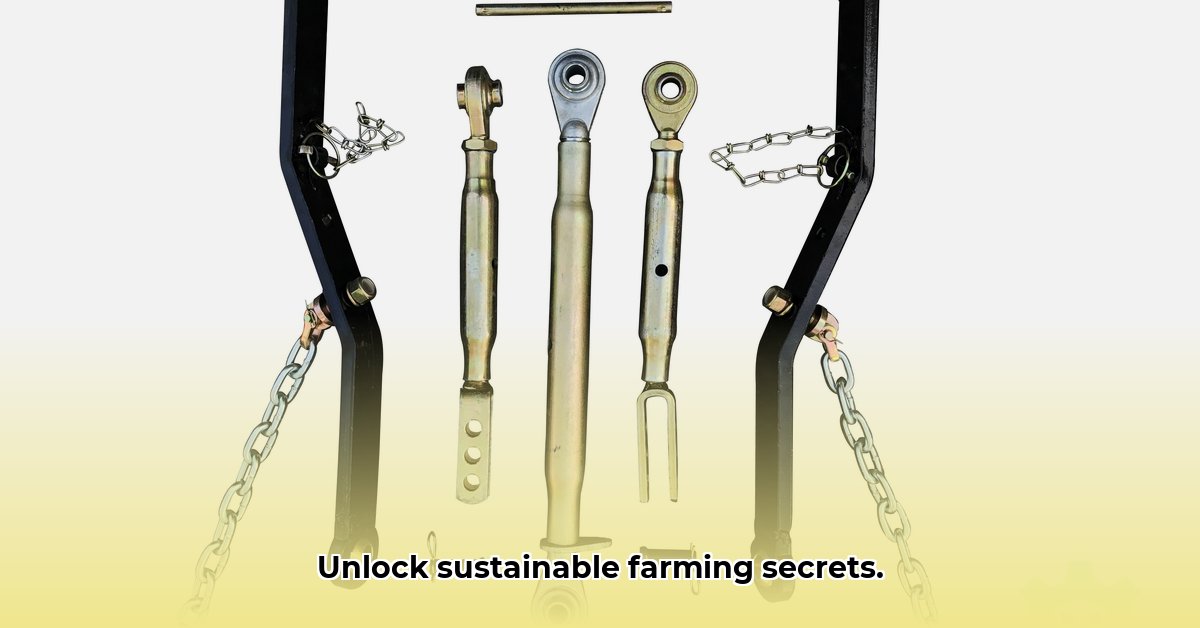
Sustainable agriculture demands efficiency and precision. Your tractor's 3-point hitch system is the key to unlocking both, providing a versatile connection for a wide range of implements crucial for environmentally conscious farming practices. This guide will equip you with the knowledge to select, maintain, and effectively utilize 3-point hitch components, maximizing your farm's productivity and sustainability. For more specialized attachments, check out this helpful resource on 3-point grapple attachments.
Understanding Your 3-Point Hitch: The Foundation of Efficient Farming
The 3-point hitch is more than just an attachment point; it's a precisely engineered system that allows for accurate implement positioning. This precision is crucial for minimizing soil disturbance, optimizing fertilizer application, and ensuring even seed planting—all cornerstones of sustainable agriculture. The system consists of three primary connection points: two lower links and a top link, forming a triangle that stabilizes and positions the attached implement. Think of it as the perfectly calibrated interface between your tractor's power and the tools that cultivate your land. But how can this seemingly simple system significantly impact your farm's sustainability?
Isn't it surprising how such a seemingly basic system can have such a profound impact on the efficiency and sustainability of your farming operation?
Essential 3-Point Tractor Parts: A Detailed Overview
Understanding the individual components of your 3-point hitch is vital for effective operation and maintenance. Let's delve into the key players:
Lower Links: These connect the implement to the tractor's hitch, and their precise adjustment determines the implement's working depth. Regular lubrication and inspection are vital to prevent wear and ensure smooth operation.
Top Link: The top link completes the triangular attachment, controlling the implement's tilt and ensuring level operation. Correct adjustment is critical for even seed planting and fertilizer spreading.
Stabilizer Bars (Optional): Although optional, stabilizer bars significantly enhance stability, particularly with heavier implements. They reduce swaying, minimizing soil compaction and improving overall efficiency.
Hydraulic Cylinders: These provide the lifting power for the implements. Regular checks for leaks are essential, both for efficient operation and environmental protection, preventing spills of potentially harmful hydraulic fluid.
Sensors (Modern Systems): Many modern tractors incorporate sensors that monitor implement position and depth, allowing for extremely precise control. Regular calibration of these sensors is crucial for maximizing efficiency and minimizing input waste.
Selecting and Maintaining Your 3-Point Hitch Components: Investing in Sustainability
Choosing the right parts is just as vital as using the right tools. Here's a guide:
Compatibility: Ensure complete compatibility between your tractor model, the 3-point hitch, and the implements you plan to use. Incompatibility can lead to damage and reduced efficiency.
Quality over Quantity: Invest in high-quality, durable parts. While the initial cost may be higher, longer-lasting components reduce waste and long-term expenses—a core principle of sustainable farming.
Proactive Maintenance: Regular maintenance is paramount. This includes visual inspections for wear and damage, frequent lubrication of moving parts, and prompt replacement of worn components. Keeping detailed maintenance records facilitates preventative measures and reduces downtime.
Practical Maintenance Steps: A Step-by-Step Guide
Preventative maintenance significantly extends the lifespan of your equipment and improves efficiency. Adopt this simple, four-step process:
Regular Visual Inspections (Weekly): Carefully inspect all hitch components for wear, cracks, bends, or leaks. Address any issues immediately.
Lubrication (Monthly): Lubricate all moving parts with appropriate grease, ensuring smooth operation and minimizing friction.
Prompt Replacement (As Needed): Replace any worn or damaged components promptly to prevent further damage and costly repairs.
Detailed Record Keeping: Maintain a meticulous log of all maintenance performed, including dates, actions, and any observations. This data will aid in future planning and preventative measures.
The Link Between 3-Point Hitch Maintenance and Sustainable Farming Practices
The benefits of a well-maintained 3-point hitch extend beyond smooth operation—they are intertwined with sustainable farming goals:
Minimized Soil Compaction: Properly adjusted implements reduce soil disturbance, preserving soil health and structure. This leads to improved water infiltration and aeration, essential for healthy crop growth.
Precise Input Application: Accurate implement positioning minimizes waste of fertilizers, pesticides, and seeds, reducing environmental impact and production costs.
Enhanced Efficiency: Reduced downtime and optimal implement performance translate to increased productivity and profitability.
Extended Equipment Lifespan: Preventative maintenance significantly prolongs the lifespan of your equipment, reducing the need for frequent replacements and minimizing waste.
Overcoming Precision Agriculture Challenges in Developing Countries
Precision agriculture offers immense potential for boosting yields and sustainability. However, adoption in developing countries faces hurdles. The 3-point hitch offers a practical entry point: its relative affordability, adaptability, and ease of maintenance make it an accessible solution for improving farming practices and promoting sustainable agriculture. Focusing on training and education about 3-point hitch maintenance empowers farmers and enables them to optimize their existing equipment for greater efficiency and yield.
Key Takeaways:
- A well-maintained 3-point hitch is essential for efficient and sustainable farming.
- Regular maintenance reduces costs, maximizes lifespan, and promotes environmentally sound practices.
- The 3-point hitch offers a readily accessible and adaptable technology for improving agricultural practices in developing countries.
- Combining affordable equipment with targeted training programs empowers farmers to achieve sustainable growth.
This guide provides a comprehensive foundation for understanding and utilizing the 3-point hitch system effectively. By diligently maintaining and optimizing this critical component, farmers can significantly enhance the efficiency, productivity, and sustainability of their operations.